Walk Smarter, Not Harder
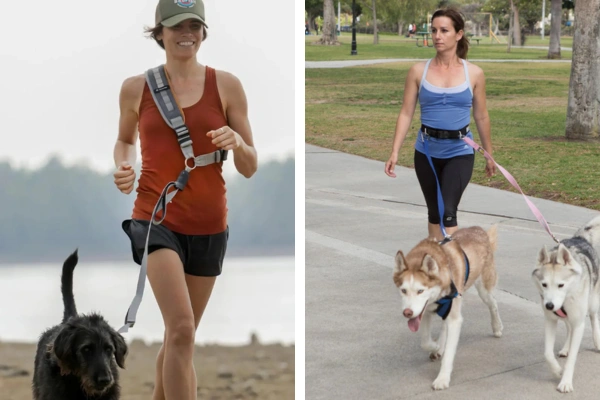
Hands-free dog walking isn’t just a trend—it’s a practical upgrade for control, comfort, and safer daily routines. Whether you’re juggling coffee, your phone, or focusing on proper leash training, the right setup can transform your walks.
The big question: Should you choose a crossbody leash or a waist belt system? This guide breaks it down so you can choose what actually fits your lifestyle.
What Is Hands-Free Dog Walking?
Hands-free systems attach the leash to your body instead of your hand. The two most common styles are:
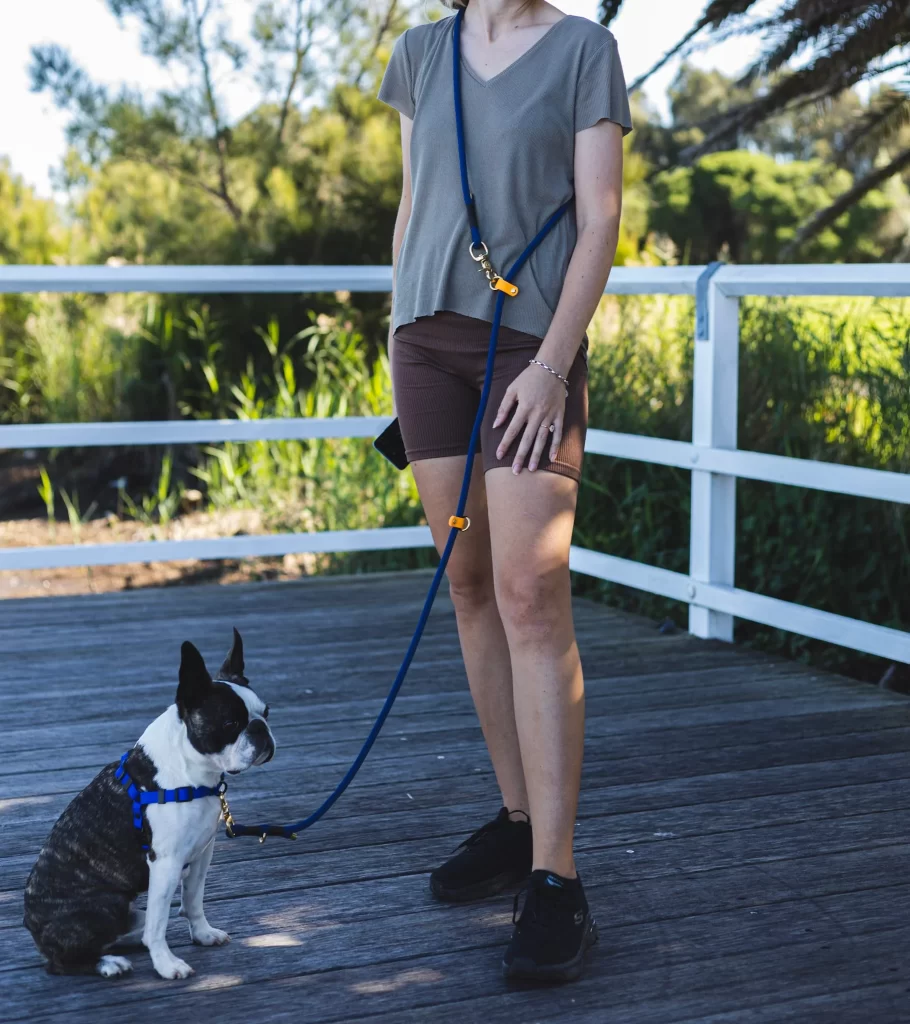
- Crossbody leashes: worn diagonally across your torso
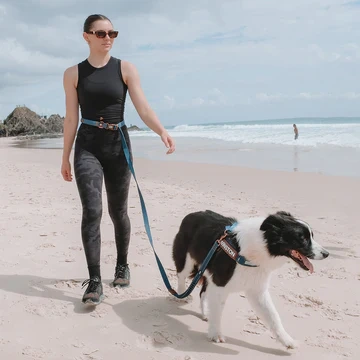
- Waist belts: secured around your hips
Both options free your hands, but they feel very different in real-life use.
Crossbody Leashes: Balanced Control & Everyday Comfort
Why It Matters
A crossbody leash distributes tension across your shoulder and upper body, which can feel more natural for casual walks.
Best for:
- City walks
- Small to medium dogs
- Low to moderate pullers
- Owners who prefer upright posture
Key Benefits
- Better upper-body control
- Keeps leash tension closer to your center of gravity
- Comfortable for longer, relaxed walks
- Easy to manage in crowded areas
Potential Downsides
- Can strain shoulders if your dog pulls hard
- Less stable for running or sudden lunges
- Not ideal for large, strong dogs
Action Step
Choose a crossbody leash with:
- Adjustable length
- Shock-absorbing bungee section
- Quick-release clip for safety
📌 Pro Tip
If your dog is still learning leash manners, a crossbody leash offers more immediate control than a waist belt.
Waist Belt Leashes: Stability & Active Lifestyles
Why It Matters
Waist belts anchor the leash around your core and hips, which are stronger and more stable than your arms.
Best for:
- Running or jogging
- Hiking
- Large or strong dogs
- High-energy breeds
Key Benefits
- Hands completely free
- Better weight distribution through your core
- Ideal for active movement
- Reduces arm and shoulder fatigue
Potential Downsides
- Less precise control for training
- Can pull your balance off if your dog lunges
- May feel restrictive if poorly fitted
Action Step
Look for a waist belt with:
- Wide padded support
- Secure buckle system
- Built-in traffic handle for quick control
📌 Pro Tip
For strong pullers, pair a waist belt with a no-pull harness to reduce sudden jerks.
Crossbody vs Waist Belt: Quick Comparison
| Feature | Crossbody Leash | Waist Belt |
|---|---|---|
| Control | Higher | Moderate |
| Comfort | Upper body | Core/hips |
| Best For | Casual walks | Running & hiking |
| Dog Size | Small–medium | Medium–large |
| Stability | Moderate | High |
Simple rule:
- Want control? → Crossbody
- Want freedom + activity? → Waist belt
Which One Is Right for You?

Choose Crossbody If You:
- Walk in busy areas
- Have a smaller or calmer dog
- Want more control during training
- Prefer a natural walking posture
Choose Waist Belt If You:
- Run or hike regularly
- Have a strong or energetic dog
- Want fully hands-free movement
- Focus on endurance and long walks
Safety Tips (Don’t Skip This)
Hands-free doesn’t mean risk-free.
Always:
- Use a well-fitted harness instead of a collar
- Avoid hands-free setups with untrained reactive dogs
- Keep a backup handle within reach
- Practice in low-distraction areas first
2026 Trend: Smarter, Low-Stress Dog Walking
Modern dog care focuses on:
- Canine enrichment walks (sniffing over speed)
- Reduced leash tension
- Better body alignment for owners
- Low-stress outdoor routines
Hands-free systems support all of these when used correctly.
Final Verdict
There’s no universal winner.
Crossbody leashes offer control and simplicity. Waist belts offer freedom and stability.
The best choice depends on your dog’s behavior and your daily routine—not trends.
Conclusion (Save This)
Hands-free walking can make your daily routine easier, safer, and more enjoyable—but only if you choose the right system. Use this guide to match your leash style to your dog’s needs and your lifestyle.
Save this to your Pinterest board so you can compare both options before buying.