If you live with a cat, you’ve probably experienced it: the moment you close a door, your cat suddenly needs to be on the other side. Scratching, meowing, pawing under the door, or sitting there in protest—cats often act like closed doors are a personal offense.
This behavior isn’t spite or stubbornness. It’s rooted in natural feline instincts, psychology, and sensory awareness. Here are five real reasons cats hate closed doors, explained in a way that helps you understand what your cat is actually thinking.
1. Cats Are Territorial by Nature
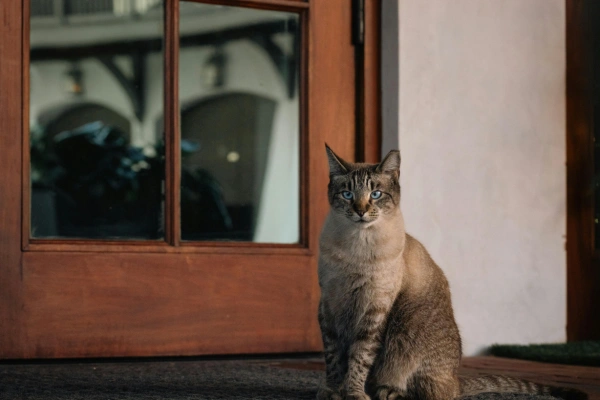
Cats don’t just live in your home—they map it mentally.
Every room is part of their territory, and territory equals safety. When a door is closed, it blocks access to a familiar area and disrupts their sense of control over their environment.
From a cat’s perspective, a closed door means:
- A part of their territory is suddenly unavailable
- They can’t patrol or monitor it
- Something may be happening without their knowledge
This loss of access can create stress, even if the room isn’t especially interesting.
Key point: Cats feel safest when they can freely move through their entire territory.
2. Curiosity Is a Survival Instinct
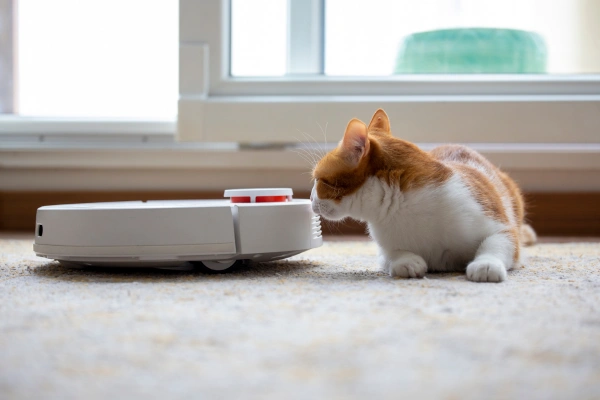
Cats evolved as hunters. Curiosity kept them alive.
A closed door represents unknown information:
- New smells
- New sounds
- New activity
Even if the room is familiar, closing the door changes the environment. Cats are wired to investigate changes because, in the wild, changes could mean prey—or danger.
That’s why cats often lose interest the moment you open the door. It’s not about wanting in forever. It’s about knowing what’s going on.
3. Cats Dislike Losing Control Over Access
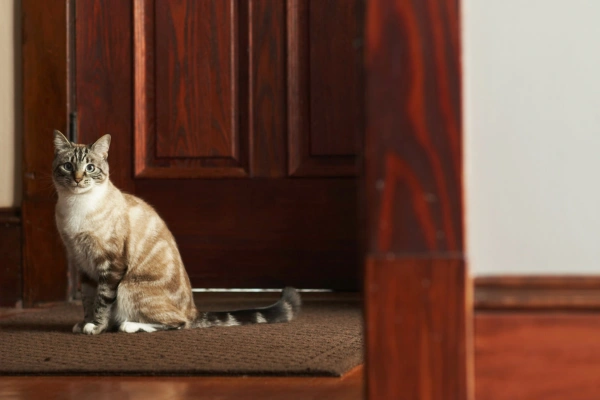
Cats value choice more than closeness.
Being able to choose where they go, when they rest, and how close they are to others gives cats a sense of control. A closed door removes that choice.
This is why:
- Cats may cry to get into a room… then leave immediately
- They react more strongly when doors are closed suddenly
- They seem offended rather than frightened
It’s not the room they want—it’s the freedom to decide.
4. They Want to Be Near You (On Their Terms)
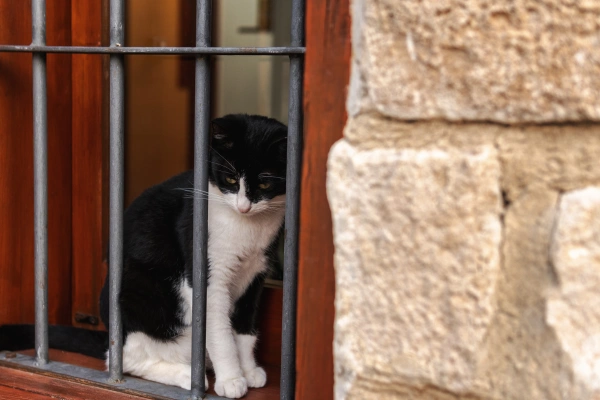
Despite their independent reputation, most cats are deeply attached to their humans.
Closed doors often separate cats from their people. When you close a door, your cat may interpret it as:
- Social separation
- Being excluded from their “group”
- Loss of access to a trusted presence
This is especially common when:
- You close the bathroom door
- You shut the bedroom door at night
- You work behind a closed office door
Your cat doesn’t necessarily want attention. They just want to be nearby and aware of what you’re doing.
5. Cats Rely on Sound and Smell More Than Sight
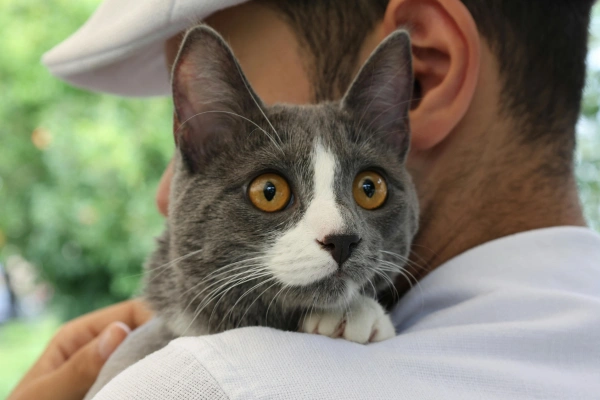
Closed doors change the sensory landscape.
Cats have incredibly sensitive hearing and smell. When a door is closed:
- Sounds become muffled or distorted
- Scents are blocked or altered
- Vibrations feel different
These changes can be confusing or unsettling. Your cat may sit outside the door trying to:
- Listen
- Smell
- Gather information
Pawing under the door isn’t misbehavior—it’s data collection.
Is This Behavior a Problem?
In most cases, no. It’s normal feline behavior.
However, excessive distress—such as nonstop crying, destructive scratching, or panic—can indicate:
- Separation anxiety
- Stress from routine changes
- Lack of environmental enrichment
If door obsession is intense, it’s worth looking at your cat’s overall routine, stimulation, and emotional security.
What You Can Do (Without Giving Up Privacy)
You don’t have to keep every door open forever.
Helpful strategies include:
- Giving your cat more vertical space (cat trees, shelves)
- Providing interactive toys and playtime
- Keeping routines consistent
- Using door stoppers to leave doors slightly open when possible
For scratching, a scratch post near the door can redirect behavior.
The Bottom Line
Cats don’t hate closed doors because they’re stubborn or dramatic.
They react because closed doors:
- Block territory
- Create unknowns
- Remove choice
- Separate them from you
- Alter sensory information
Understanding this helps you respond with empathy instead of frustration.
To your cat, an open door isn’t about access—it’s about security, awareness, and trust.