It’s 2 a.m., and your peaceful home is interrupted by loud, persistent meowing. You check your cat—they’re fed, have water, and the litter box is clean. So why are they still yowling?
Sudden nighttime meowing is a common reason cat owners lose sleep, but veterinarians say it’s usually a signal, not just bad behavior. Understanding the root cause can help you respond effectively—and restore peace for both you and your feline friend.
Common Reasons Cats Meow at Night
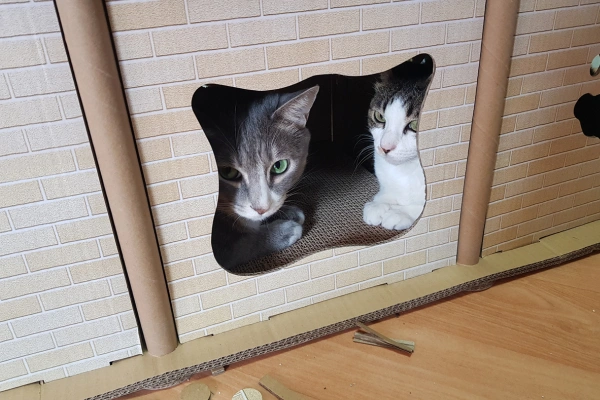
Cats are naturally crepuscular, meaning they are most active at dawn and dusk. But nighttime noise, pacing, or yowling often indicates something deeper.
1. Medical Causes
Veterinarians always check health first. Pain, illness, or discomfort can make cats vocalize more, especially at night. Common medical triggers include:
- Hyperthyroidism – Overactive thyroid increases energy, restlessness, and appetite.
- Urinary tract infections or kidney disease – Discomfort can make cats meow for attention.
- Arthritis – Joint pain makes it difficult to settle or climb to favorite spots.
- Cognitive dysfunction (senior cats) – Memory decline or confusion often manifests as nighttime vocalization.
Vet tip: If your cat’s meowing is new and persistent, a checkup is essential to rule out medical issues.
2. Hunger or Irregular Feeding
Cats are creatures of habit. A cat used to eating at a specific time may become restless or vocal if their routine changes.
Hack: Offer a nighttime snack or use an automatic feeder to keep feeding consistent.
3. Attention-Seeking Behavior
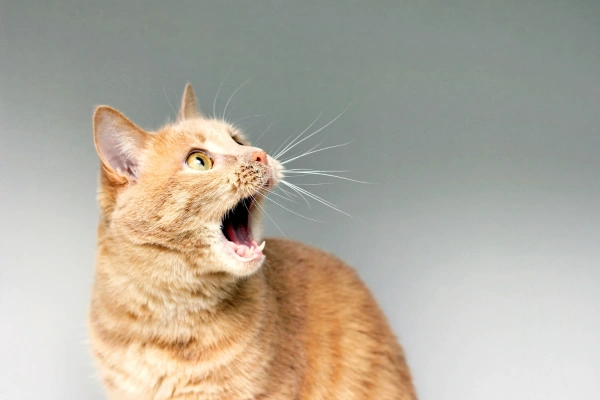
Some cats meow at night because they want interaction. If a cat has learned that meowing gets a response—petting, play, or even scolding—they may repeat it.
Vet-backed solution:
- Avoid giving attention immediately. Reward quiet behavior instead.
- Provide enrichment during the day to reduce boredom at night.
4. Stress or Environmental Changes
Cats are sensitive to:
- New pets or family members
- Recent moves or rearranged furniture
- Unfamiliar sounds outside (dogs, wildlife, construction)
Stress increases nighttime vocalization.
Vet-recommended hack:
- Use pheromone diffusers (Feliway®) to signal safety.
- Create a quiet, cozy sleeping space with blankets and soft lighting.
5. Loneliness or Separation Anxiety
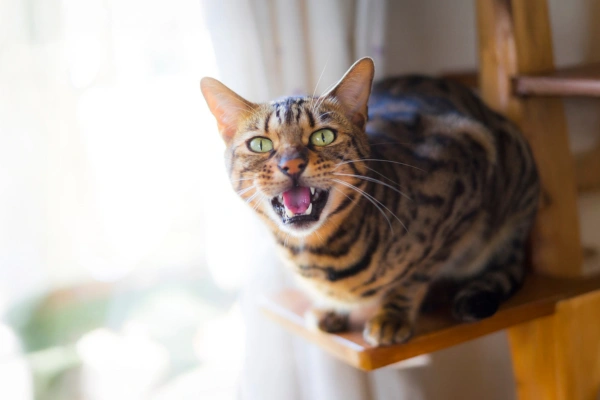
Cats can experience separation anxiety too. A cat who feels lonely may meow persistently when the house is quiet.
Tips to ease anxiety:
- Leave a piece of clothing with your scent
- Introduce a companion pet only if suitable
- Maintain daytime play sessions to tire them out before bedtime
6. Cognitive Decline in Older Cats
Senior cats (often 11+) may develop feline cognitive dysfunction, similar to Alzheimer’s in humans. Symptoms include:
- Nighttime vocalization
- Disorientation
- Litter box accidents
Vet intervention:
- Cognitive supplements (omega-3s, antioxidants)
- Consistent routines
- Environmental enrichment
How Veterinarians Diagnose Nighttime Meowing
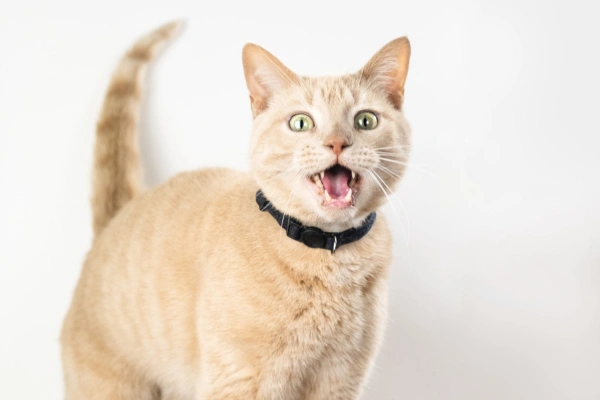
A thorough vet evaluation usually involves:
- Physical examination – Checking teeth, joints, eyes, and ears.
- Bloodwork & urine tests – Screening for thyroid issues, kidney disease, diabetes, or infections.
- Behavior assessment – Discussing lifestyle, daily routine, and triggers with the owner.
By ruling out medical causes first, vets ensure that the problem isn’t a hidden illness.
Practical Solutions to Reduce Nighttime Meowing
1. Keep a Consistent Routine
Cats thrive on predictability. Feeding, playtime, and bedtime routines reduce stress and help your cat sleep at night.
2. Increase Daytime Activity
High-energy cats often act restless at night. Encourage:
- Interactive toys
- Play sessions before bedtime
- Puzzle feeders
3. Create a Comfortable Sleep Environment
- Soft bedding in a quiet, dark corner
- Background noise (white noise or soft music) can soothe anxious cats
- Keep litter boxes clean and accessible
4. Avoid Reinforcing Meowing
Responding to nighttime vocalization can unintentionally reinforce it. Instead:
- Ignore meowing during night hours
- Reward quiet behavior with attention or treats
5. Vet-Approved Supplements
For anxiety, mild cognitive decline, or stress:
- L-theanine or alpha-casozepine supplements
- Omega-3 fatty acids for brain support
- Feline pheromone diffusers
Always consult your veterinarian before starting supplements.
When Nighttime Meowing Warrants Immediate Attention
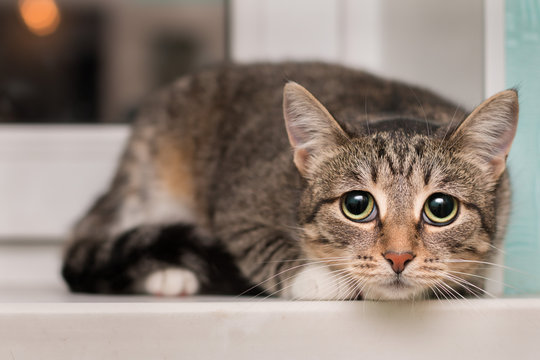
Seek veterinary help promptly if meowing is accompanied by:
- Blood in urine or stool
- Vomiting or diarrhea
- Sudden weight loss
- Persistent hiding or aggression
These could indicate urgent health problems.
Preventing Nighttime Vocalization in New Kittens
- Socialize early: Expose kittens to family members, noises, and gentle handling.
- Set a feeding schedule: Avoid free-feeding overnight.
- Provide safe toys and climbing spaces: Mental stimulation reduces boredom.
Early habits often prevent meowing problems in adulthood.
Bottom Line
Nighttime meowing is rarely random—it’s a communication tool. Your cat is trying to tell you something: pain, discomfort, stress, or simply boredom.
Vets emphasize that addressing underlying causes first—medical, behavioral, or environmental—is crucial. With routine, enrichment, and patient training, most cats can return to peaceful nights, allowing you—and them—to rest comfortably.
Remember: Understanding your cat’s needs and signals is the first step toward a quiet, happy home.