Have you ever noticed your dog yawning right after you do? At first, it might seem like coincidence — but science suggests there’s much more going on. This little act is a fascinating glimpse into how dogs connect with us emotionally. In this article, we’ll explore why dogs yawn when you yawn, what it says about their empathy, and why this seemingly simple behavior makes the human-dog bond even stronger. By the end, you’ll be seeing yawns in a whole new light.
1. What Is Contagious Yawning?
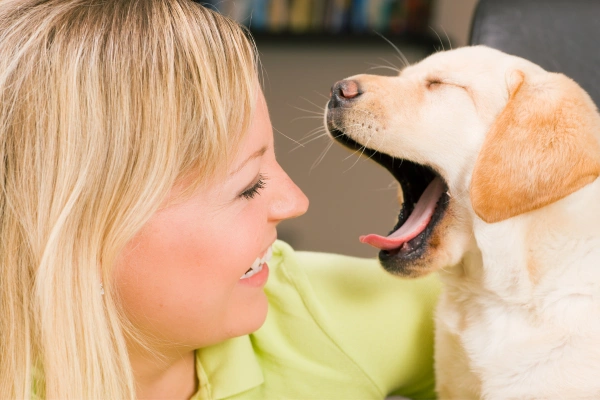
Yawning is not just a sign of tiredness. Contagious yawning occurs when seeing, hearing, or even thinking about yawns triggers a yawn in another individual. Humans do it all the time — and so do dogs.
- Emotional connection: Dogs who yawn after their humans are showing empathy, not just mimicking behavior.
- Social bonding: Contagious yawning strengthens the bond between individuals, including across species.
Studies indicate that dogs are sensitive to human social cues, which is why this simple behavior carries deeper meaning.
2. Research on Dogs and Yawning
Several studies in canine behavior science have revealed remarkable insights:
- Dogs yawn more often after seeing a familiar person yawn than a stranger.
- Female dogs tend to respond more than males, showing subtle differences in empathetic behavior.
- Dogs with stronger attachment to their owners are more likely to display contagious yawning.
This suggests that dogs don’t just yawn randomly — they actively respond to your emotional and social state.
3. The Science Behind the Yawn
Yawning triggers neurological responses in dogs that indicate awareness of another’s state:
- Mirror neurons: These are specialized neurons that fire both when an individual performs an action and when they see someone else perform it. Dogs likely use these neurons to “mirror” your yawn.
- Oxytocin release: The bonding hormone may increase in dogs when they mimic human behavior, reinforcing social connection.
- Emotional empathy: Contagious yawning is linked to the ability to empathize with others — your dog is reading your state and responding emotionally.
4. Emotional Meaning of Yawning in Dogs
A yawn from your dog can communicate more than tiredness:
- Stress regulation: Dogs may yawn to calm themselves when sensing your stress.
- Communication: It signals understanding or acknowledgment of your mood.
- Social cohesion: Helps maintain a peaceful, emotionally synced relationship with their human family.
This small, adorable behavior demonstrates the sophisticated emotional intelligence dogs have developed over thousands of years alongside humans.
5. When Yawning Is a Sign of Empathy
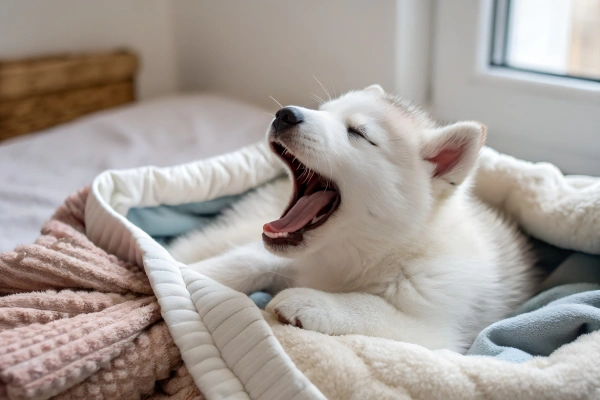
Not every yawn is about sleep. Watch for these clues:
- Your dog yawns when you yawn or sigh.
- The yawn occurs during calm interactions, not just at night or after exercise.
- Your dog looks at you before or during the yawn.
If you notice these patterns, it’s likely your dog is connecting with you emotionally, not just copying a reflex.
6. How to Strengthen This Connection
Understanding this empathetic behavior opens up ways to bond more deeply:
- Spend quality time together: Calm activities like cuddling or gentle play enhance emotional syncing.
- Observe subtle cues: Pay attention to your dog’s body language — yawns, head tilts, and gentle nudges.
- Positive reinforcement: Reward behaviors that respond to your emotions to strengthen the bond.
- Stay mindful of your own emotions: Dogs are sensitive to your stress, happiness, and energy levels.
7. Fun Facts About Dog Yawning
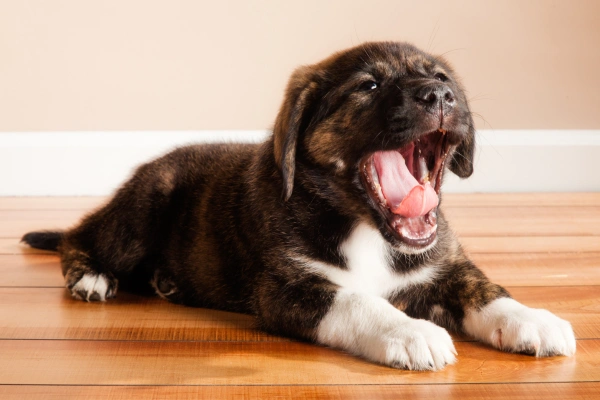
- Dogs can catch yawns from videos of humans, not just real-life cues.
- Puppies begin to show contagious yawning as early as a few months old.
- Yawning is more likely in dogs with a strong social bond with their owner.
- Mirror neuron activity in dogs is similar to humans and great apes, highlighting their advanced social cognition.
8. Common Misconceptions
- It’s not always tiredness: Dogs yawning after you yawn are often responding emotionally, not physically sleepy.
- Not a trick: Dogs don’t yawn to manipulate or get attention — it’s empathy in action.
- Not breed-specific: While some breeds are more expressive, most dogs have the capacity for emotional yawning.
The next time your dog yawns right after you do, remember — it’s more than adorable synchronicity. It’s a glimpse into the mind of your loyal companion, showing empathy, social intelligence, and deep emotional connection. This tiny behavior demonstrates just how attuned your dog is to you, reinforcing the special bond you share every day.