If your dog seems calm all day but suddenly starts licking their paws at night, you’re not imagining things. This behavior is very common—and it usually means something is bothering them when everything gets quiet.
Nighttime paw licking can be harmless, but in some cases, it’s your dog’s way of signaling discomfort, stress, or irritation. Let’s break down the most common reasons this happens and when you should pay closer attention.
1. Allergies Become More Noticeable at Night
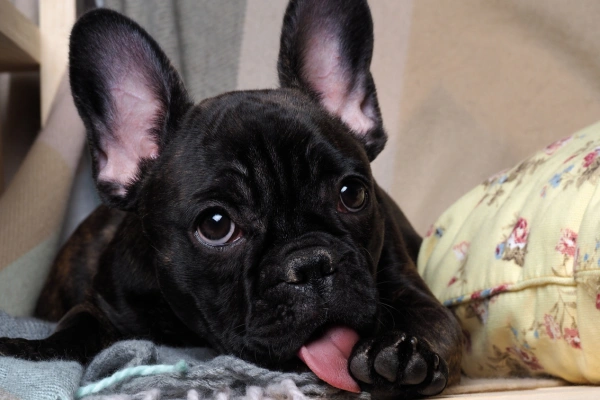
Many dogs lick their paws because of skin allergies, and nighttime makes the sensation harder to ignore.
During the day, dogs are distracted by walks, play, and noise. At night, when they’re lying still, itching or irritation feels stronger.
Common allergy triggers include:
- Dust mites in bedding
- Pollen carried inside on fur
- Food sensitivities
- Household cleaners or detergents
Paws are especially affected because they’re in constant contact with the ground.
2. Dry or Irritated Paw Pads
Cold air, heat, rough surfaces, or frequent washing can dry out paw pads. When paws feel tight or cracked, dogs instinctively lick to soothe them.
This is more common:
- In winter or very dry climates
- After long walks on pavement
- If your dog walks on sand or salt
Occasional licking is normal. Constant licking can make dryness worse by breaking the skin.
3. Anxiety Shows Up When the House Is Quiet
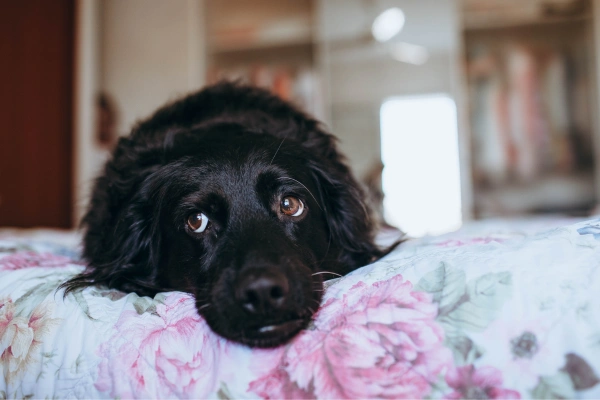
Nighttime is when many dogs finally slow down—and that’s when anxiety surfaces.
Dogs that lick their paws at night may be:
- Stressed
- Overstimulated during the day
- Unsettled by changes in routine
Paw licking releases calming endorphins, so it becomes a self-soothing habit, similar to nail-biting in humans.
This is especially common in:
- Dogs with separation anxiety
- Dogs sensitive to noise
- Rescue dogs
4. Minor Injuries or Something Stuck Between Toes
Small issues are easy to miss during the day.
Your dog may be licking because of:
- A tiny cut
- A thorn or seed
- A splinter
- An insect bite
At night, when pressure shifts and the dog lies down, discomfort becomes more noticeable, triggering licking.
Always check between the toes and around the pads if the licking is focused on one paw.
5. Yeast or Bacterial Infections
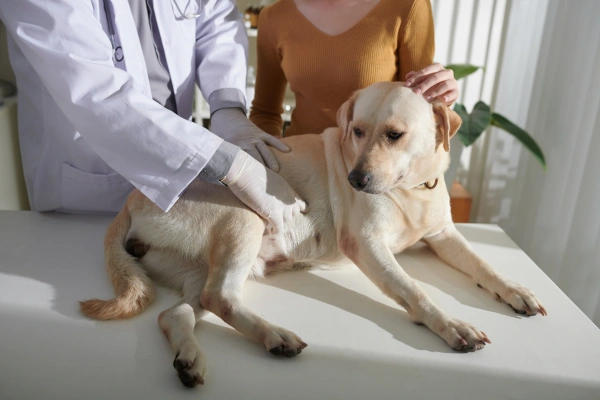
Persistent nighttime licking—especially with redness or a smell—can point to an infection.
Signs to watch for:
- Brown or reddish fur around the paws
- Swelling
- Strong, musty odor
- Moist skin between toes
Warm, dark areas like paws are ideal for yeast to grow, and licking only makes it worse.
6. Habitual or Compulsive Licking
Sometimes the original cause is gone, but the behavior stays.
Dogs can develop a habit of licking their paws at night simply because:
- It became part of their bedtime routine
- It helps them relax
- It started during a stressful period
This type of licking often happens on both paws and looks rhythmic or repetitive.
When Paw Licking Is a Problem
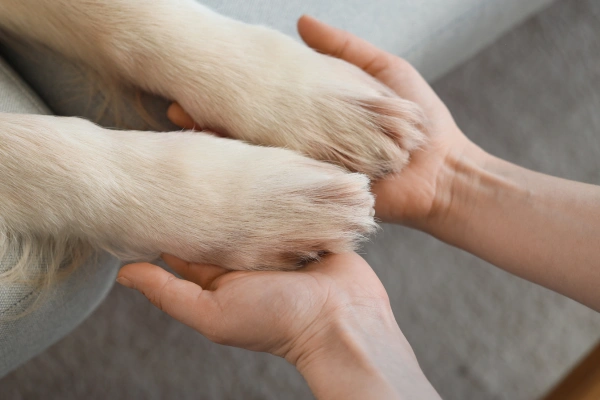
Occasional licking is normal. You should be concerned if:
- Licking happens every night
- Skin looks raw or inflamed
- Your dog wakes up just to lick
- Licking interrupts sleep
These signs mean it’s time to identify the cause, not just stop the behavior.
Simple Things That Can Help
Depending on the cause, these steps often reduce nighttime licking:
- Wash paws with plain water after walks
- Dry paws thoroughly
- Wash bedding regularly
- Keep a consistent evening routine
- Check paws daily for small injuries
If the licking continues or worsens, a vet check is important to rule out allergies or infection.
The Bottom Line
Dogs lick their paws at night because that’s when discomfort, itching, or stress is hardest to ignore. Most of the time, it’s linked to allergies, dry skin, anxiety, or minor irritation.
Pay attention to when, how often, and which paw your dog licks. Those details usually reveal the real cause.