
A dog’s stomach is far more sensitive than most people realize. Small changes in food, stress, bacteria, or even heat can cause digestive problems that leave your dog uncomfortable, bloated, or refusing food.
The real challenge? Dogs can’t explain where it hurts. So digestive issues often hide behind small signs — soft stool, unusual licking, minor vomiting, or slight behavior changes.
This guide explains the 7 most common digestive problems in dogs, the signs to watch for, and safe, natural ways to help soothe your dog’s stomach at home. You’ll also learn when natural remedies are enough — and when it’s time to call a vet.
1. Diarrhea
Diarrhea is one of the most common digestive problems in dogs. Causes include:
- sudden food changes
- stress
- parasites
- spoiled food
- infections
- sensitivity to an ingredient
Natural Ways to Help:
- Plain pumpkin (1 tsp per 10 lbs) – excellent for firming stool
- Probiotics – restore gut balance
- Boiled chicken + rice – calming temporary diet
- Electrolyte hydration – helps prevent dehydration
When to see a vet:
- diarrhea lasts longer than 48 hours
- there’s blood
- your dog becomes weak
2. Constipation

Constipation often hides behind:
- hard stool
- straining
- small dry poop
- skipping a day or two
Causes include dehydration, lack of fiber, too many bones, or sedentary lifestyle.
Natural Ways to Help:
- Pumpkin – adds moisture + fiber
- More water – hydration stimulates bowel movement
- Olive oil (½–1 tsp) – helps lubricate stool
- Longer walks – movement activates digestion
When to see a vet:
- no poop for 48+ hours
- repeated straining with pain
3. Vomiting
Not all vomiting is serious — sometimes it’s from eating too fast or grass. But repeated vomiting signals irritation, infection, or possible toxin exposure.
Natural Ways to Help:
- 12 hours fasting (adults only) – lets the stomach rest
- Small amounts of bone broth – restores comfort
- Ginger tea (very mild) – helps with nausea
- Return to food slowly – boiled chicken or turkey
When to see a vet:
- vomiting multiple times
- vomiting + diarrhea
- vomiting yellow foam every morning
4. Gas & Bloating
Occasional gas is normal. But excessive gas, swollen belly, or discomfort when touched is a digestive warning sign.
Causes:
- poor-quality food
- too many treats
- allergies
- swallowing air when anxious
- eating too fast
Natural Ways to Help:
- Slow-feeder bowl – reduces swallowed air
- Probiotics – balance gut bacteria
- Avoid table scraps – many ingredients irritate stomach
- Digestive enzymes – help break down food
Emergency warning: A hard, swollen belly + restlessness can mean bloat (GDV) → immediate vet care.
5. Sensitive Stomach
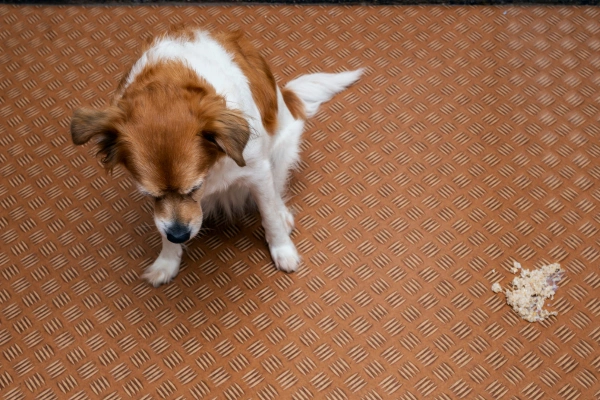
Some dogs have naturally delicate digestion. They react to:
- high-fat food
- low-quality kibble
- artificial additives
- fast diet changes
- stress
Natural Ways to Help:
- Consistent diet – no sudden switches
- Limited-ingredient food – fewer triggers
- Turkey or chicken base – gentle protein
- Probiotics daily – supports long-term gut health
Sensitive stomachs often improve dramatically with simple, steady routines.
6. Food Allergies or Intolerance
Food allergies show up through skin + stomach together.
Watch for:
- itchy paws
- chronic ear infections
- soft stool
- bloating
- vomiting
- loose stool after specific foods
Common triggers include: chicken, beef, dairy, wheat, soy.
Natural Ways to Help:
- Elimination diet (one protein for 6 weeks)
- Switch to a novel protein: lamb, salmon, duck
- Omega-3 supplements – reduce inflammation
- Prebiotics + probiotics – support immune response
If symptoms keep returning with the same food, an intolerance is likely.
7. Acid Reflux
Acid reflux in dogs is more common than many owners realize.
Signs include:
- swallowing repeatedly
- licking lips
- burping
- vomiting small amounts
- eating grass
- discomfort after meals
Natural Ways to Help:
- Smaller, more frequent meals
- Avoid spicy, fatty, or greasy foods
- A little cooked oatmeal or rice – calms irritation
- Slippery elm powder – protects the stomach lining
When to see a vet: Persistent reflux can damage the esophagus if untreated.
When Are Natural Remedies Enough?
Natural methods work well when:
- symptoms are mild
- symptoms last less than 24–48 hours
- your dog is eating, alert, and hydrated
- there is no blood or severe pain
When You MUST Call a Vet
Seek veterinary care immediately if your dog has:
- repeated vomiting
- persistent diarrhea
- nonstop bloating
- refusal to eat for 24 hours
- blood in stool or vomit
- extreme tiredness
Digestive problems escalate quickly — especially in puppies and senior dogs.
Final Thoughts
Your dog’s digestive health affects their energy, mood, coat, sleep, and immune system. By learning these silent signs and using gentle, natural remedies, you can help your dog feel comfortable, safe, and healthy — while catching potential problems early.
A happy stomach = a calm mind, strong body, and joyful dog.